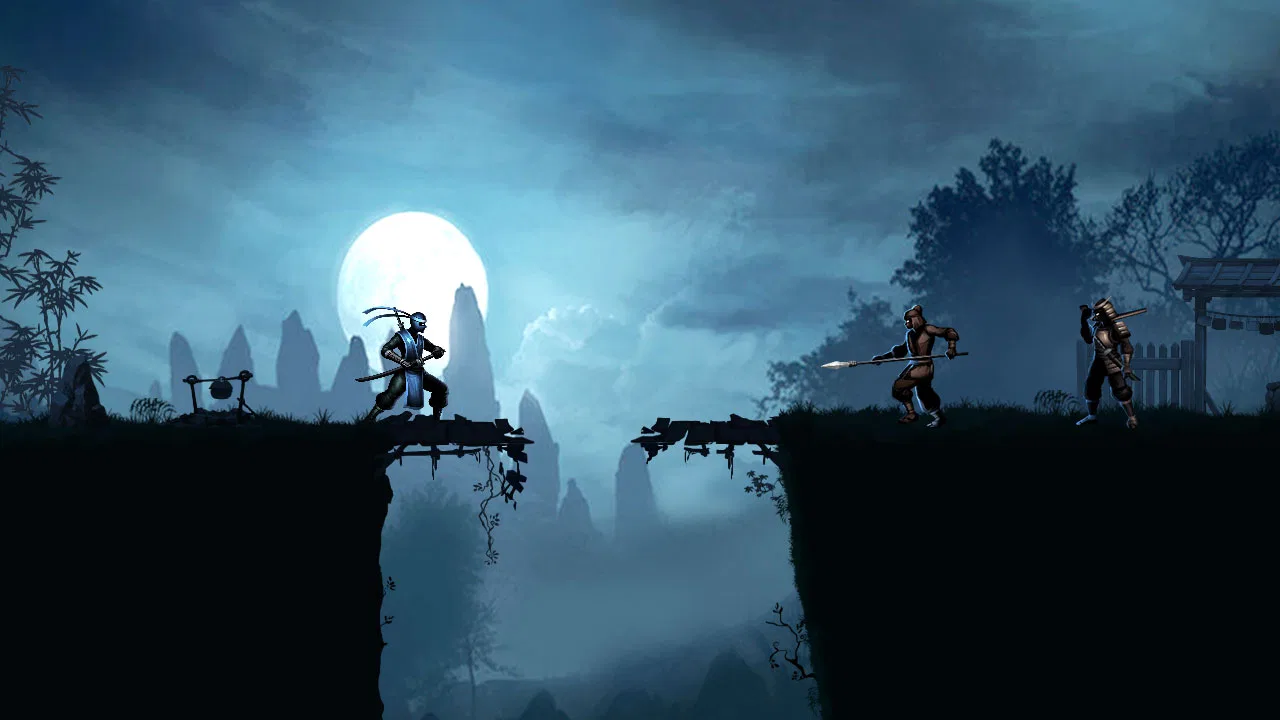
Ninja warrior: legend of adven
- 4.6
- Rating
- 100.00M
- Installs
- Free
- Price

 Analysis by App-foxy
I spent time with Ninja warrior: legend of adven as a quick-action adventure game, and my first impression was that it is built for short bursts of fighting rather than long, relaxed exploration. You guide a ninja through dangerous encounters, react to attacks, and gradually improve your ability to deal with tougher situations. It is free to start, aimed at Teen players, and developed by TOH Games.
That simple description does not quite explain why the game has stayed popular. It has reached over 100 million installs and holds a 4.6 average from around 489 thousand ratings, which suggests that its straightforward ninja-action formula works for a large audience. My experience was more specific: the game is easy to begin, but playing it well depends on building a repeatable rhythm. If you rush every encounter, the action can feel messy. If you learn to watch enemy movement, use your available abilities carefully, and treat each attempt as practice, the combat becomes much more satisfying.
How the everyday play loop feels
The normal workflow is uncomplicated. I open the game, move into an encounter, deal with enemies using attacks and movement, then use the result of that run to prepare for the next challenge. That makes it suitable for a short break when I do not want a large role-playing game demanding a long session. A few minutes can feel productive, especially when I am focused on improving one part of my play instead of trying to clear everything at once.
You May Also Like

 AccuWeather: Weather Radar
AccuWeather Review: A Quick, Clear Forecast for Everyday Decisions
For everyday plans, the best forecast is the one you can understand quickly. AccuWeather makes rain timing, radar, and local conditions easy to act on, with a few trade-offs.

 Hill Climb Racing
Why Hill Climb Racing Still Turns Crashes Into One More Run
A tiny car, a bumpy hill and one more upgrade: Hill Climb Racing keeps resurfacing because its simple chaos makes every near-miss feel personal.

 AliExpress - Shopping App
AliExpress Makes Global Shopping Feel Personal, but Shoppers Bear the Risk
AliExpress turns a global marketplace into a pocket-sized discovery engine. Its reach is useful, its shopping loop compelling, and its trade-offs easy to miss.

 Lords Mobile: Kingdom Wars
Lords Mobile Is a Kingdom-Building Routine, Not a Quick Match
A case-by-case verdict on the building, battles, device demands, and social commitments that make Lords Mobile rewarding for some players and exhausting for others.

 PDF Scanner app - TapScanner
TapScanner Makes Paperwork Easier to Capture, Check, and Share
TapScanner makes scanning with a phone feel less like a rescue operation and more like a dependable step in getting work done. Its capture tools are useful, though not flawless.

 Block Blast!
 Shows How Much a Puzzle Game Can Leave Out
A quiet grid game shows why puzzle players increasingly value instant clarity, repeatable skill and low-pressure play—and where the genre still needs to catch up.
More From Our News Desk
View All News


The important habit is to stop treating every fight as a race. Early on, I found myself attacking as soon as an enemy appeared, which often left me exposed to the next strike. A better approach is to create a small cycle: observe the enemy, make one deliberate attack, reposition, and only then decide whether to continue. This is not a flashy trick, but it makes the game feel less random and gives you more control over difficult encounters.
For example, I would use a commute break to play one or two attempts rather than beginning a session with the expectation of finishing a large section. On the first attempt, I watched for attack timing. On the second, I tried to repeat the safer movement pattern. That workflow is more useful than repeatedly restarting without learning anything, and it also keeps the game from becoming tiring.
The game works best for players who enjoy action that rewards quick reactions and repetition. It is less convincing for someone looking for a deep story, a large open world, or a slow tactical adventure. The ninja theme gives the encounters their identity, but the main appeal is the moment-to-moment fighting rather than extended narrative development.
What I changed before taking the game seriously
I recommend beginning with a short familiarization session instead of immediately chasing progress. Learn how movement responds, how attacks connect, and how much space you need to avoid an incoming hit. The screen can become busy when several threats appear, so understanding the basic controls before the pressure rises makes a noticeable difference.
I also stopped spending every available improvement resource as soon as I received it. Saving enough to make a meaningful upgrade or strengthen the part of my play that was causing repeated failures gave each decision more purpose. The best choice depends on your current obstacle: if you are surviving but dealing too little damage, offense matters; if you are reaching an encounter and losing quickly, durability or safer play deserves attention first.
That is one of the more useful lessons in this game. Progress is not only about becoming stronger. It is also about identifying why a run failed. Was I hit while attacking? Did I move into a crowded area? Did I use an ability too early? Asking that question turns repetition into practice instead of frustration.
Settings and preparation that are worth checking
Before settling into regular play, I would check the available control and presentation options on your device. The exact experience can vary depending on screen size, touch sensitivity, and how comfortably you can see incoming threats. A control arrangement that feels fine on a larger phone may feel cramped on a smaller display, so it is worth testing your grip and hand position before difficult encounters.
I prefer holding the phone in a way that leaves one thumb responsible for movement and the other ready for attacks or abilities. The goal is not to make the controls look neat; it is to avoid covering the area where an enemy is approaching. If your fingers block the action, you may react late even when you understood what was happening.
Sound is another setting worth considering. Playing with audio can help make the action feel clearer and more energetic, but silent play is more practical in public places. When I play without sound, I compensate by watching enemy animation more carefully instead of relying on an audio cue. That small adjustment matters during repeated attempts, especially when a visual effect is easy to miss.
Because the game contains optional in-app purchases ranging from $0.99 to $29.99 per item, I would also decide in advance whether you want to spend anything. The free starting point is enough to evaluate the core experience, and setting a personal limit prevents a frustrating encounter from turning into an impulsive purchase. I found it more rewarding to first understand whether a failure came from weak preparation or poor timing.
The current version is 1.92.1, and the game supports devices running Android 6.0 or later. That makes it accessible to many older Android phones, although practical comfort still depends on the device rather than the operating-system requirement alone. A phone that handles the game but struggles with touch response or battery condition may make precise combat feel worse than it should.
Small preparation habits that improve consistency
I like to begin a session with one low-pressure attempt. Instead of trying to make progress immediately, I use it to restore my sense of timing. This is especially helpful after a day away from the game, because the first few actions can feel faster than expected. A warm-up run also reveals whether the phone is responding normally before I commit to a difficult section.
Another useful habit is to keep your attention on the next threat rather than the reward from the last one. It is easy to focus on collecting something or celebrating a successful hit and then walk directly into the following attack. I found that looking slightly ahead of the ninja, toward the space where the next danger is likely to appear, improved my reactions.
Finally, I avoid changing several parts of my approach at once. If I alter movement, attack timing, and upgrade choices after a failure, I cannot tell what helped. Changing one variable per attempt creates a clearer learning process and is particularly useful for players who want to master the game rather than simply push through it.
Faster patterns for experienced play
Once the basic controls feel natural, speed comes from reducing hesitation, not from attacking constantly. I try to recognize familiar enemy behavior and prepare my next movement before the current exchange has completely ended. That lets me keep momentum without turning the encounter into uncontrolled button presses.
A strong pattern is to separate attacks into safe and risky moments. When an enemy is committed to an animation or has just finished an attack, I use that opening for damage. When several enemies are close together or the screen is difficult to read, I prioritize space. This approach may look slower at first, but it usually produces faster progress because fewer attempts are lost to avoidable hits.
Abilities should also be treated as tools for solving a specific problem. I used to activate them whenever they were available, which left me without an answer when the encounter became crowded. Holding an ability for a dangerous moment can be more valuable than using it for a small advantage early in the fight. The right timing depends on the situation, but the principle is consistent: spend power to change the outcome, not simply because the button is ready.
Experienced players can also use repeatable routes through an encounter. I do not mean memorizing every detail mechanically; I mean deciding where I want to stand when the first threat appears, which direction I will use to create space, and when I will commit to an attack. Having that plan reduces panic. If the situation changes, I adjust, but I am no longer inventing every movement under pressure.
One non-obvious benefit of this method is that it makes upgrades easier to judge. If my approach is consistent, I can tell whether a stronger attack actually shortens an exchange or whether extra survivability gives me more room to recover from mistakes. Without a repeatable pattern, improvements can feel vague because every attempt plays out differently.
When speed stops being an advantage
There is a point where rushing becomes counterproductive. If I am losing because I am always one action ahead of the enemy, adding more speed only hides the real issue. I slow down until I can identify the moment that causes the failure, then increase the pace gradually. This is especially important for players coming from fast arcade games, where constant aggression is often rewarded.
I also recommend taking a break after several poor attempts. The game is designed around repetition, but repetition while frustrated can produce worse habits. A short pause helps me return with better attention, and I often notice that the encounter was manageable once I stopped trying to force it.
For a friend who wants a quick game between tasks, I would suggest setting a simple goal: learn one enemy pattern, complete one encounter more cleanly, or test one upgrade choice. That keeps the session focused and avoids the feeling that a short play period was wasted because it did not produce a major breakthrough.
Where the game reaches its limits
The same simplicity that makes this adventure game approachable can limit its appeal over time. Players who need a rich story, extensive character customization, or a large world to explore may find the fighting loop repetitive. The ninja presentation is enjoyable, but it does not automatically provide the variety of a full-scale role-playing adventure.
Touch controls can also become a source of friction. Precise reactions are harder when the screen is crowded or your fingers cover part of the action. If you prefer physical buttons, a controller-focused game may be a better choice. Likewise, players who dislike retrying encounters or learning through failure may not enjoy the game’s emphasis on repeated attempts.
The Teen content rating is worth taking seriously for younger players and families. I would not choose it as a blind recommendation for children simply because the game is free to install. The combat theme and optional purchases make it better suited to players who understand the rating and can manage spending decisions responsibly.
There is also a trade-off in the free-to-play structure. Starting without an upfront price makes it easy to try, but optional purchases can affect how some players approach progression. I prefer to judge the game on its basic loop first and treat purchases as a personal choice rather than a requirement for enjoying the opening experience. Anyone who strongly dislikes monetized progression should consider that before investing much time.
Compared with a slower adventure game, this title offers quicker feedback and less commitment per session. Compared with a traditional platform action game, it may feel less precise if you are expecting the exact responsiveness of physical controls. Compared with a deep role-playing game, it is easier to pick up but gives you fewer reasons to wander or build a long-term story identity. Those differences make the choice fairly clear: select this game for accessible ninja combat, not for a broad adventure simulation.
Who should install it and who should pass
I would recommend it to players who enjoy short action sessions, learning enemy timing, and improving through repetition. It is also a reasonable choice for someone who wants a free game to test before deciding whether to spend money. The large install base and strong average rating show that the formula has broad appeal, and my experience supports that when the player enjoys direct, uncomplicated combat.
I would suggest skipping it if your main priority is a substantial narrative, calm exploration, or a combat system built around long strategic planning. I would also be cautious if you are easily frustrated by retries or if you want a completely purchase-free experience with no temptation to spend. Another game in the adventure category may suit you better if you want more variety between battles.
For families, I would check the Teen rating before handing it to a younger player and make purchase expectations clear. For older phones, the Android 6.0 minimum is encouraging, but I would still test responsiveness during a real fight rather than judging compatibility only from installation. A game can run and still feel uncomfortable if touch input is delayed or the display is too small for your preferred grip.
My verdict after building a repeatable routine
After spending time with it, I see this as a focused ninja fighting game rather than a complete adventure world. Its strongest quality is the clear connection between practice and improvement. When I watched patterns, saved abilities for meaningful moments, and made one controlled change at a time, the action became much more enjoyable.
Its weaknesses are equally clear. The loop may feel repetitive for players who need constant novelty, touch controls can make precision harder, and the optional purchase structure deserves a deliberate approach. Those are not reasons to dismiss it, but they do define the audience. This is not the right choice for every adventure fan.
The best way to play is to treat every attempt as a small experiment, not just a chance to win. Check your controls, warm up with an easy run, watch what actually causes a failure, and reserve abilities for moments that can change the fight. That routine gives the game more depth than its short store description suggests.
TOH Games has created a free, accessible option for players who want ninja-themed action without committing to a long session. It was released on October 17, 2019, and its continued presence is understandable: the controls are approachable, the encounters encourage repetition, and a successful run feels earned when you stop rushing. I recommend it to anyone who enjoys fast adventure combat and is willing to learn its rhythm. I would choose a different game for a richer story or more expansive exploration, but for focused ninja action on a phone, it is a solid download to try.
FAQs for Ninja warrior: legend of adven
01What is the main objective of Ninja Warrior: Legend of Adventure?
Ninja Warrior: Legend of Adventure is a captivating action-platformer where players take on the role of a legendary ninja warrior. The main objective is to navigate through challenging levels filled with obstacles and enemies, rescuing hostages and defeating powerful bosses to restore peace to the ninja world. Skills and strategy are essential for success.
02Are there in-app purchases in Ninja Warrior: Legend of Adventure?
Yes, Ninja Warrior: Legend of Adventure includes in-app purchases that allow players to enhance their gaming experience. You can buy various items such as power-ups, weapons, and skins to customize your ninja. However, these purchases are optional, and you can enjoy the game fully without spending money.
03How does the control system work in Ninja Warrior: Legend of Adventure?
The control system in Ninja Warrior: Legend of Adventure is designed to be intuitive and user-friendly, utilizing touch-screen mechanics. Players use virtual buttons to move, jump, and attack. The controls are responsive, allowing for precise actions, which is crucial for mastering the intricate movements and overcoming challenging levels.
04What kind of challenges can players expect in the game?
Players can expect a variety of challenges in Ninja Warrior: Legend of Adventure, including intricate platforming sections, timed sequences, and combat scenarios against diverse enemies. Each level is uniquely designed to test your agility, reflexes, and strategic thinking, with increasing difficulty as you progress further into the game.
05Is Ninja Warrior: Legend of Adventure suitable for all ages?
Ninja Warrior: Legend of Adventure is suitable for players of all ages, offering engaging gameplay that appeals to both younger audiences and adults. The game features mild cartoon violence typical of action-platformers, but it is generally considered family-friendly and does not contain any explicit content.
Pros
- Engaging and challenging gameplay.
- Stunning graphics and sound effects.
- Smooth and responsive controls.
- Variety of levels and missions.
- Offline play mode available.
Cons
- Can be repetitive over time.
- In-app purchases can get pricey.
- Ads might interrupt gameplay.
- Requires significant device storage.
- Limited character customization.

Ninja warrior: legend of adven
Gallery